

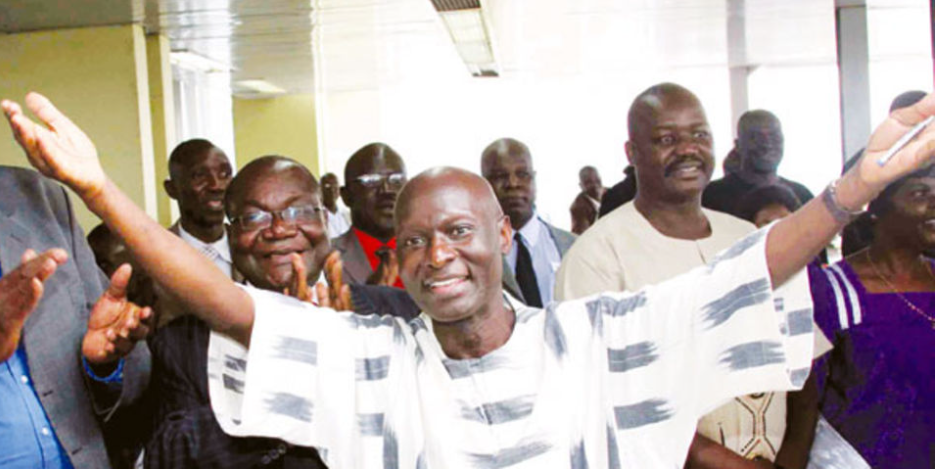
On this day in 2010, Olara Otunnu was elected president of the Uganda People's Congress, marking one of the most significant turning points in the party’s history.
Held during a National Delegates’ Conference at Mandela National Stadium, the vote ended decades of direct control by the Obote family and signalled an attempted political reset for one of Uganda’s oldest parties.
Otunnu, a former United Nations Under-Secretary-General who had spent 23 years in exile, swept to victory with 623 votes against 180 for Jimmy Akena, the son of former president Milton Obote.
The result carried heavy symbolism. Since the UPC’s founding in 1960, the party had never before been led by someone outside the Obote family circle.
But the victory quickly exposed deep divisions inside the party. Many long-time loyalists to the Obote family resisted Otunnu’s leadership almost immediately, creating a power struggle that would dominate his five-year tenure.
The tensions became more visible during the 2011 presidential election campaign.
Otunnu refused to vote for himself on polling day, arguing that the electoral process was a sham because of an inflated voter register. He eventually finished fourth with just 1.58 per cent of the national vote, a result critics inside the UPC used to question his ability to rebuild the party’s traditional support base.
After the election, Otunnu became one of the leading opposition figures in the “Walk to Work” protests, which aimed to address rising living costs and governance issues. Alongside politicians such as Kizza Besigye and Norbert Mao, he was arrested several times during demonstrations that became a defining feature of Uganda’s opposition politics in 2011.
By 2015, the internal battle for control of the UPC had escalated into an open confrontation centred on Uganda House, the party headquarters in Kampala.
Supporters of Akena moved to take over the party leadership through a disputed district conference process, an action Otunnu denounced as a “civilian coup”. Despite protests from his faction, Akena’s group gained physical control of the offices and the party effectively split into rival camps.
The division reshaped the UPC for years afterwards. Akena’s faction later entered a working relationship with the ruling National Resistance Movement, while Otunnu loyalists eventually regrouped under Joseph Bossa.
Otunnu stepped away from active party politics in 2015, ending a turbulent chapter that had begun with enormous hope and historic symbolism.
Though his leadership fractured the UPC, his election remains a landmark moment in Ugandan political history because it briefly broke the party’s long-standing attachment to the Obote dynasty and forced a wider debate about the party’s identity and future.
